


Precision Marking Solutions for the Oil & Gas Industry

Dot Peen Marking Machines
Precise, deep markings for permanent identification.
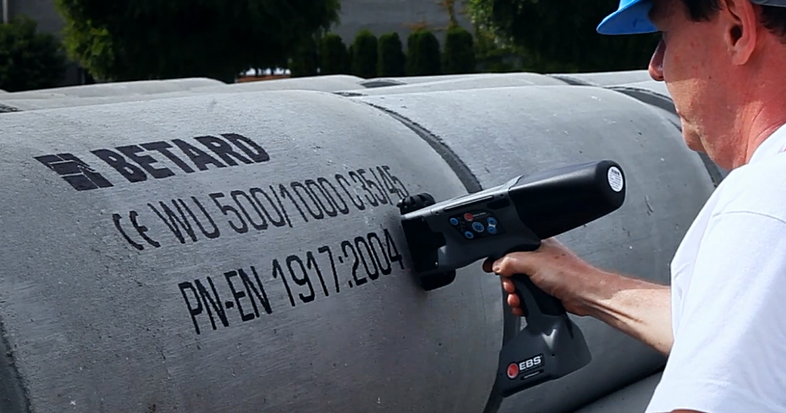
Our dot peen marking systems are expertly designed to provide precise identification and traceability, ensuring durable, clear and legible marks on a wide range of components such as drill pipes, industrial tags and other critical parts. These systems are engineered to provide marking solutions that withstand tough industrial environments while delivering consistent performance, making them ideal for oil & gas applications where accurate traceability is essential.
Whether for serial numbers, barcodes, or logos, our dot peen marking systems deliver reliable results tailored to your needs.

Automated Stencil Cutting Machines
Our computer controlled stencil cutting machines have set the standard in longevity and performance for over 20 years. These machines streamline operations by reducing manual effort, speeding up output and ensuring consistent results across your marking applications.
They cut characters at fast speeds, reducing manual time significantly, supporting multiple materials from vinyl to stencil boards, and come with easy to use software that simplifies design creation and the production of stencilled text.
This machine will cut characters from 3mm upwards in a fraction of the time it takes to cut on the old manual stencil cutting machines.
Tag Embossing Machines
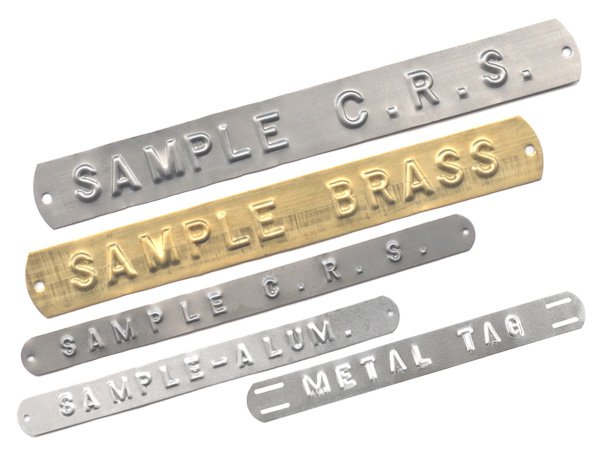
Tag embossing machines are an essential tool for creating durable and permanent raised impressions on a variety of materials, commonly used for asset tracking, safety labelling and industrial applications in the oil and gas sector.
Perfect for producing tags used in safety labelling, equipment identification and inventory management, tag embossing creates raised text and designs that remain legible even under extreme conditions like heat, abrasion or chemicals.
Whether you need to create custom tags for industrial assets or safety signage, tag embossing machines provide a reliable and efficient solution.
How We Support the Oil & Gas Industry
Over the years, we have partnered with leading oil and gas firms to provide effective, cutting-edge marking equipment across multiple applications.
Whether for shipping cargo, marking components, or ensuring product traceability, our solutions have been proven to withstand harsh environments while delivering outstanding results.
- Drill Pipe Marking: Seamlessly mark pipes with precision and durability for easy identification at remote sites.
- Cargo Identification: Efficiently mark shipping crates bound for global destinations.
- Powder Coating Applications: Mask and identify critical coated areas with robust stencil solutions.
Enquire about Oil & Gas
If you are interested in any of our services, don’t hesitate to get in touch with us today and we’d be happy to help with your enquiry or with any questions you may have.
Call us on
+44(0)1531 640400Make an enquiry
Contact UsWhat is the difference between etching and embossing?
Etching involves removing material to create a design or marking, whereas embossing raises the material’s surface to form a pattern. With WeLase, the etching process reaches a professional standard, perfect for precise applications.
How can you tell the difference between etching and engraving?
The key difference is in how each process alters the material. Engraving is a physical method where sharp tools or machines carve directly into a surface, creating precise lines through mechanical force. On the other hand, etching is a chemical process that uses acid, concentrated lasers or other corrosive substances to burn designs into a material by removing its surface layer selectively. Both techniques achieve detailed, long-lasting results, but they differ greatly in their execution and tools. Engraving relies on direct contact for precision, while etching achieves intricate patterns through chemical reaction.
What is the difference between etching and stamping?
Etching and stamping are two distinct methods used to create designs on materials. Etching is a process that removes material from the surface to create a design, often using acid, lasers, or other tools to burn, cut, or dissolve specific areas. This technique is ideal for achieving intricate and detailed patterns.
Stamping, on the other hand, is a physical process where force is applied to press a design into a material, creating an impression or indentation.
What materials can be processed with laser marking machines?
Laser marking machines are incredibly versatile and can handle a wide range of materials with precision and ease. Common materials include metals such as stainless steel, aluminum, brass, and copper, which are often used in industrial or manufacturing applications. Plastics like ABS, polycarbonate, and acrylic are widely processed for branding or product labeling.
Laser marking machines can also work with natural materials like wood, leather, and glass, making them ideal for personalisation projects or decorative purposes. Even ceramics and coated surfaces, such as anodised aluminium or powder-coated metals, can be effectively marked.
What is the difference between laser marking and laser cutting?
Laser marking involves altering the surface of a material to create high-contrast marks, such as logos, barcodes, or text, without cutting through it. This process is often used for identification, branding, or decorative purposes and works across a variety of materials like metals, plastics, wood, and glass.
Laser cutting, on the other hand, is a process designed to slice through materials entirely, creating precise shapes, patterns, or components. This method is widely used in manufacturing and fabrication and is ideal for materials like metal sheets, acrylic, wood, and textiles.
